



2-SECOND BURSTS
SHORT THOUGHTS ON LEADERSHIP, DECISION-MAKING, FLIGHT, AND OTHER TOPICS OF THE DAY
ARTICLES
Breaking the Stranglehold of Programs of Record
In every conflict, many of our tactical tasks could be handled with less funds and more effectively if we step away from our stovepipe funding and rigid force structure models—models that continue to fail us. Afghanistan’s war is a glaring example of this, and another one is unfolding right now with Iran.
At the outbreak of Operation ENDURING FREEDOM, bombers and their range played a key role to reach out and touch Taliban/Al Qaeda forces 9,000+ miles away from any US-based forces.Even fighter crews stationed in the Middle East faced excessively long crew days to get overhead any ground fight in the Afghan mountains, making the bombers’ range and excessive payload a nice security blanket overhead for any US and allied forces in the early days of the fight.
That soon changed as we initially forward deployed A-10s in country, later adding F-15Es, F-16s, MQ-1s/9s, and even AC-130 gunships for quicker response times, direct interface with ground forces, and a stronger presence in theater. Despite this force buildup, we still employed bombers (mainly B-1s from Al Udeid) in Afghanistan to augment our fighter force and provide the ground forces the on-demand Air Power they needed. B-1 crews served with distinction and provided valuable support for ground forces year after year. But was it really worth it? Was there a better way to employ those crews? Unequivocally, yes. And maybe with even the crews of some of the more expensive fighters. But rigid budgetary authorities and turf wars prohibited anything but responses involving “Programs of Record” like the B-1.
B-1s were designed to counter the Soviet threat of the 80s, then remained as a long-range strike platform with a new conventional mission after the START negotiations limited our nuclear triad to fewer platforms than we had available. Keeping the B-1 after the Cold War made sense because of its newness, speed, range, and payload, even as a conventional platform only.
When you need to deliver enough weapons to level a city, the B-1 is awesome. When you need to penetrate deep in enemy territory quickly to deliver munitions at great range, and break windows as you pass by, the B-1 is a beast.For anything less, it is not a cost-effective weapon. Small fleet, complicated aircraft requiring heavy maintenance load, heavy cost per flying hour, and a need to maintain the airframes as a greater strategic deterrent make it an even less appealing platform for a mission like Close Air Support. When applied to Afghanistan, the tanker demands, long transit times, and previously stated high cost per flying hour (~$160K/hour), the cost of each bomb was beyond obscene. Sometimes their large payload was needed, but for probably less than 1% of the missions. For most of the larger payload demands, 2-ship of F-15Es would have been more than sufficient, even overkill.
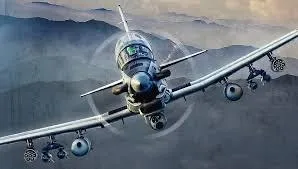
Imagine if we had pulled from the old Accelerated Co-pilot Enrichment (ACE) playbook and our bomber crews and left the B-1s at home. Let me do the math for you.Imagine if each of those bomber wings had A-29s as ACE platforms, and they augmented their expensive flying in the B-1 with effective and inexpensive flying in an -29, AT-6, or something of the sort.$160K/hour vice $1200/hour, the crews could become very seasoned aviators in a less expensive, less complicated, yet operationally feasible platform for many scenarios.
Now, instead of deploying 12 B-1s to Al Udeid to cover a 24-hour window over Afghanistan, we deploy those same crews in 24-28 A-29s right in Afghanistan to employ as 2-ships and cover the same 24-hour window. Instead of about $3.5B a year (yes, with a B), the cost would have been $28-30M a year.The B-1s’ lifecycle would be prolonged; crews would season in a tactically relevant aircraft and serve the nation well both in combat and in their readiness as B-1 crews.
The money is there (cost that out over the length of the Afghan war). The mission need is there on many levels. The will just needs to be there. The ability to move money to do something like this needs to be there.
Rice bowl defenders will cry foul. Money color protectors will claim malfeasance. Bomber force structure protectors will miss the forest from the trees as they focus on keeping every dime in the bomber accounts, afraid they will lose justification to upgrade and improve their aircraft. Sustainment centers will complain about having to maintain yet another airframe. Training pipelines will roll inverted and pull because of the need to create another training structure. So many excuses, so many hardships lumped upon the status quo.
But the combatant commanders would love the flexibility. Taxpayers would love the better use of tax dollars. And the nation would move ever closer to greater security from a wide variety of threats. We don’t need the gold watch for every mission. We shouldn’t misuse our high-end assets for missions that we can do better with low tech. We shouldn’t see cheaper, simpler solutions as a threat to the large Programs of Record. We should instead stay focused on solving for the current X.

Speaker Request Form
Let Us Know How We Can Help.
At Decisive Leadership, we welcome the opportunity to share hard-won lessons on leadership and decision-making with the broader business community, executive and operations teams, conferences, academic institutions, and military and veteran organizations — anyone working to build confident, capable leaders. We believe leadership isn't reserved for the corner office, and that the right message delivered to the right room can change how an entire team performs.
